Wednesday, February 15, 2023

Audiobook Review: A Strange Habit of Mind by Andrew Klavan


 I picked up When Christmas Comes, the first book in this series as a palate cleanser after an action-heavy thriller and was immediately enchanted by the mysterious protagonist Cam Winter, an English professor who is more than meets the eye. I was delighted to discover that a sequel was already written and grabbed the audiobook from my local library at the first opportunity.

While it helps to read these books in chronological order to get the full background on the main character, it's not strictly necessary. The framing of this story, just like the previous one, consist of therapy sessions, where Cam recounts crucial events from his past to his therapist, a much older woman who is remarkable in her own right Andrew Klavan is one of the few writers who can insert long flashbacks into an otherwise fast-paced story while still holding the reader's rapt attention, and in this case the technique works beautifully. The meandering nature of the sessions rings true to life. Even readers who'd never been in therapy know how our most important memories flow in and out of the back brain and the effect they have, obviously or not, on our present.

What we get, essentially, are two stories in one: the past and the present. In the past, Cam kills his best friend. In the present, he investigates an apparent suicide of his former student for whose fate he feels partly responsible.

If this sounds dark, it is. Klavan started out as a writer of hard-boiled noir thrillers, and is still able to take the reader to pitch-black places. However, since his conversion to Christianity, there is an added layer of hope and love of humanity that keeps me coming back too his work.

I noticed that this novel is classified as a mystery, and I suppose it technically is, but more in the mold of Colombo than Poirot. The culprit is known very early on, and it's only a matter of obtaining the proof. That doesn't make the story any less compelling, and the stakes are certainly as high as can be, but the nature of the tension is different.

The villain would not be out of place in an older James Bond movie, although not in the modern reincarnation of the franchise. If you read Klavan's portal fantasy Another Kingdom (which I highly recommend and have reviewed on my blog) you will likely see some similarities, and that's all I will say to avoid spoilers.

While the climax and the plot resolution are satisfying, the story takes its sweet time winding down, leaving us with plenty to think about the nature of good and evil, the line in between, and how a person might end up crossing one way or the other. With the protagonist being an Enlish professor, Klavan has an excuse to include more philosophy and poetry, literal and figurative than would be expected in the genre. If the story feels vaguely inconclusive, it's not only because the sequel is in the works, but also from the nature of the questions it leaves lingering in the reader's mind. And in these days of mostly disposable and forgettable entertainment, this is a rare gift indeed.

Saturday, February 11, 2023

Book Review: Split by Kurt Schlichter


Split is book is #6 in the Kelly Turnbull series, but chronologically #2, picking up where Crisis left off, a short time after the country has been divided between "the blues" and "the reds." The main plot has Kelly infiltrating the recently formed People's Republic to get out a crazy scientist or failing that, get hold of the MacGuffin said scientist had squirreled away. Spolier: things don't go as planned, putting Kelly on a collision course with a couple of powerful players and hooking up with unlikely allies.

While being the grimmest, most violent book in the series so far (I hear #7 takes the prize in that regard), there are plenty of humorous references to certain real-life politicians and of course commentary on leftism run amok. My favorite running joke is one of the side characters spending most of his non-shooting time explaining to everyone that he's not Ben Shapiro. It's one of those little absurdities that is truly appreciated in the midst of continuous tension and bloodshed.

Much like the rest of the series, and probably more so, this is a dire warning against letting the "national divorce" fantasy of so many come to life. Most of the warning of this particular entry is directed at the Right, Schlichter's political allies, pointing out with ruthless certainty that having guns and the will to fight won't be enough for those caught on the "wrong" side of the breakup. (Earlier published and chronologically later Indian Country shows that resistance can be possible, but is still quite unflinching as to the cost.)

A couple of new characters are introduced of whom I'd like to see more in the remaining entries, and a few meet well-deserved demise, including one at the end that's both highly satisfying and possibly the worst imaginable way to die. As with the last few entries, Schlichter's progress as a writer is great to see. His characters are more fleshed out, the social commentary is more complex, and the action scenes are more immersive. I'm looking forward to reading more of the series soon.

Wednesday, February 1, 2023

Audioook Review: Adventures of Huckleberry Finn by Mark Twain, read by Denny Delk


I read this one in my pre-teen years, in Russian translation. I don't remember it making much of an impression, but back then I was more into "girl" books and was probably just too young to fully understand the story. I finally decided to check it out on audiobook, and so glad I did! In fact, I think it is best appreciated as an audiobook. The narrator does a spectacular job transporting you to the time and place, both by using the appropriate dialects (you actually get a warning at the start that the characters will speak differently) and by the general tone and attitude.

The story is a classic and literary criticism of it is widely available, so I will only give my general impression of what, to me, makes it worth a fresh look.

While many consider it THE Great American Novel, it fell out of favor lately, another victim of cancel culture and presentism. And in truth, take the offending word out, and it still asks questions which our advanced society hasn't resolved in a satisfactory manner. How many of us would stand by a friend in defiance of propriety, societal norms, and religious teachings? How many would matter-of-factly accept condemnation in this life and damnation in the next? I think that's the real reason this novel, while both fun and exquisitely written, might be too unsettling for modern sensibilities.

And that's a shame, really, because we need more stories like this one, especially for the younger generation, and especially for boys: a thrilling, engaging adventure that's also thought-provoking, with a lot of heart and faith in humanity at its core. That said, I recommend it to anyone, including those who read it at a young age. Check it out again, and if you can, get your hands on an unabridged audiobook. You'll very likely be surprised at what you find.


Saturday, January 7, 2023

Book Review: Crisis by Kurt Schlichter


 Chronologically first in the series, but I now see why the author recommends for it to be read later on. After the satire-heavy Inferno, the change in tone is striking. This one is unrelentingly dark and more plausible now than when it was written. After reading Crisis, it's impossible to keep accusing the author of "wishful thinking" as there's zero doubt it's only a tale of dire warning.

That said, with the knowledge that the series ends with the country coming back together, it's a fairly enjoyable read. The pacing, characterization and action are all solid. As an author myself, I appreciate watching Kurt's writing skills improve with every new entry. Moving on to The Split next since this one ends on a bit of a cliffhanger.

I shelved it under dystopia on GR because it's "The US Gone Bad" premise, but the beats and style are more those of a military/political thriller. Fans of both genres will find it worthy of their time.

Friday, December 24, 2021

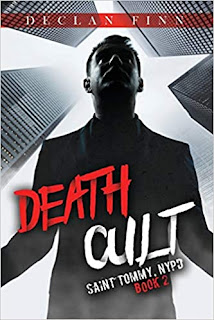
Book Review: Death Cult by Declan Finn


When I first read this book over the summer, my first impression was that the story is worth the price of admission just for the first chapter. Having skimmed it to refresh my memory in preparation for writing the review, I stand by that statement.

To quote one of my favorite Youtubers, "Allow me to explain."

At first glance, all we have is probably the most common opener in the thriller/urban fantasy genre, namely, an action scene. And it is a good one in it's own right, which is something Finn's readers have come to take for granted. However, two qualities combine to make it stand out.

First, we immediately connect with and care about the characters involved. Surprisingly many authors forget that no matter how spectacular the action, we still need to be told why we should care. Books are not movies, and descriptions of gunshots/explosions/hand-to-hand combat don't have the same immediate appeal when read as when experienced on the giant screen in surround sound. Here we have Tommy Nolan and his family, whom we'd already come to know and love from Hell Spawn, so of course we care about them being under attack. But even going into this second book in the series cold, there is immediate, visceral desire to see the family come out intact from a violent confrontation.

That brings me to the second part. I love thrillers, but too many of them suffer from the same flaw as horror movies: the characters existing in a state artificial ignorance, having never cracked opened a book or watched a movie. There are certain things that happen in those genres, and they nearly always catch the main characters by surprise.

Not so with Detective Nolan and his family. They might live in the world of urban fantasy,but they're very much grounded in reality, knowing what is likely to happen and prepared for even the most unpleasant of possibilities. Thus, the first chapter does not go the way we might expect, setting the tone perfectly for the rest of the story.

What follows is a combination of ever-escalating challenges, which Tommy and his small group of friends and colleagues meet by not simply out-fighting, but out-thinking the enemy (including figuring out who and what the enemy is). The action scenes are evenly spaced out in between the actual detective work, so the pacing never slows down enough for us to lose interest. The climax is... fiery, both literally and figuratively, and while the story does come to a satisfying resolution, the jaw-dropping last paragraph makes you run, not walk, to start on the next installment.

Tommy Nolan as a character is a joy to follow around. He is a genuinely good man with no dark past or extra emotional baggage (aside from whatever naturally comes from years of police work in a large city coupled with his recent encounters with supernatural evil). He is a family man, and a man of faith, with both of those qualities being an organic part of the character rather than something slapped on as an afterthought. It's a refreshing change, considering that the urban fantasy genre almost requires the heroes to be flawed, dark and brooding. I like those too, when they're done well and don't go overboard on darkness, but it's good, and for lack of a better word, restful to spend time with Tommy Nolan and his crew. I would recommend it both to the traditional urban fantasy fans and to those who want to an easy, fast paced read as their first introduction to the genre.

Purchase at SilverEmpire.org 

 Purchase on Amazon

Wednesday, December 8, 2021

Book Review: Another Kingdom Trilogy by Andrew Klavan


 Austin Lively has all the makings of a standard YA protagonist, although I suppose being male would make him stand out. He is an all-around loser: unloved by his parents, overshadowed by his successful, better-looking brother, always ragged on by his so-called friends, and too much of a coward to confess his feelings for a girl he likes.Suddenly (yes, "suddenly" is the first word in the book) he is transported into a fantasy world, where he is taken for a hero and compelled to embark of a quest with a help of a quirky sidekick.

The twist in the above? The subject of our seemingly cookie-cutter hero's journey is a thirty-year-old failed Hollywood screenwriter, whose main (only?) admirable quality appears to be a stubborn refusal to give up on an obviously dead and buried dream of his youth. 

Andrew Klavan, an award-winning best-selling author who deserves both designations for reasons unrelated to the recent merit-allergic metrics, has made a bit of a splash about a decade ago with a number of YA adventure/action novels aimed specifically towards teen boys. Anyone who knows me at all would not be surprised that I read and liked all of them, in addition to the adult novels Mr. Klavan produced during that period.

It was, therefore, with extremely high expectations, that I started reading this particular work. You could say my expectations were subverted because I only expected an entertaining story, not a trilogy that from Book One started edging up on my list of my all-time favorites, and now is cemented into the Top Ten, if not higher.


I spent a few days trying to articulate why that is the case. The central idea and the plot are not particularly unique. The fact that the author's worldview, which aligns with mine, unabashedly comes through, certainly helps, but philosophical alignment is no guarantee of enjoyment [frowns in the direction of too many conservative filmmakers to count]. The style is at times jarring. I normally love "first person past" narration, but here it's almost like having the camera zoom in and out, from being deep inside the character's head to having him pause to either warn the reader that something important was coming, to explain an action he'd just taken, or to "speak" to the reader directly with comments like "Right?" and "Can you believe it?" Then again, some scenes are so horrific that a bit of narrative distance might be justified, just to give the reader a break.

As an aside, the violence (with more than a touch of horror) is quite intense and feels even more non-stop than it is, in part because the mental/emotional burden placed on the protagonist, both in the real world and in his excursions into the fantasy land, is arguably higher than the physical one.

That last part might be why the story lands so well, and I am surprised to see it come from an author who made a name for himself mostly in noir thrillers.Sure, his recent books have taken on more than a tinge of Christian fiction (without the flaws associated with that genre), but on the whole his characters have been consistently tough-as-nails hyper-masculine men, and even his teen protagonists were well on their way, if not there already. This is more a story of a man discovering his masculinity, or rather reclaiming it from the stifling and corrupting circumstances of his upbringing and surroundings. 

Much like Dorothy in The Wizard of Oz, Austin finds his way towards something that has always been within his reach. The fact that he hits several breaking points along the way, each leading into deeper and more complete despair, provides a different kind of realism than we're used to in gritty, "manly" fiction. Our society both demands that men become more "sensitive" and "open about their feelings," yet still ruthlessly ignores, even mocks, otherwise strong men who show moments of vulnerability or need help dealing with grief or trauma. (Witness the Twitterbots' reaction to Kyle Rittenhouse crying during his trial). It is refreshing to see a story that does not shy away from the mental cost of fighting the good fight.


Last but not least, there are quite a few women who guide and/or inspire the hero to become, well, heroic. And what women they are... I'm hard-pressed to find my favorite. The beautiful and courageous Beth, the near-saintly Jane, the ever-elusive Ellen and of course the acid-tongued "squirrel-girl" Maud-- each one is crucial to the story and heroic in her own right, while being exceptionally feminine in ways that modern feminism cannot possibly appreciate. 

The villains are both banal and over the top, which rings true to life. I will leave it at that without spoilers, except to say the biggest female villain we encounter can give Atlas Shrugged's Lillian Rearden a run for her money in her utter lack of soul, in both religious and secular sense. 

The ending is perfect in being both perfectly satisfying and not entirely conclusive, at least the part that is set in the real world, and that once again rings true. But as I turned the last page, with that special happy/sad feeling that comes after an outstanding read, my first thought was--

"Good Lord, please don't let Klavan sell the movie rights."

Which considering that Hollywood was very much a part of the story, and not in a good way, was quite appropriate. 

Purchase on Amazon


Thursday, February 25, 2021

Keep Calm and Stay a Dittohead


As a reader, reviewer, and occasional writer of fiction, I have become familiar with the term "shocking but inevitable" when describing a plot twist or an ending. All the clues were there that the event, or something like it, would happen, and yet when it does, we still taken off guard, whether from denial or from misinterpreting the signs or from being too caught up in the flow of events to pay attention.

And so, the news or Rush's passing should have shocked no one, and it did not shock me, as such, the way Andrew Breitbart's untimely death had some years ago. How could it? We all have known for a year about his terminal illness followed the updates on the treatments, watched the hope for recovery fade, and accepted that every day Rush was on the air might be his last.

Nor should a death of a seventy-year-old who had lived a profoundly meaningful life and achieved professional, financial, and at least from the outside appearances, personal fulfillment, be considered anything but a natural course of events, to be met with a quiet nod of acknowledgement of human mortality, including our own.

And yet, I have been feeling off-kilter ever since, more than usual, which is quite something during the period of time in our history when practically nothing and no one is steady and normal in the traditional sense of the word.

I've read several tributes from people I respect, and inevitable attacks from those who only confirmed themselves to be unworthy--not even foes because that word implies a measure of honor. I've reminisced of my years as a fan going back to my first "real" job as an assistant at a printer shop, listening to the radio, fascinated by the voice I instinctively knew was different from the rest, even if my still limited English prevented complete understanding. I joked with my husband, also a fan (thanks to me), about the time we were in the audience of Rush's TV show, and he briefly appeared on camera with a dreamy smile on his face from listening to Rush describe a particularly delicious cut of steak. He received calls from a few of his students who saw him on TV, and in those days it was all in good fun, and did not get him cancelled as it would have today. Even our children, now with views of their own, not quite as in line with ours as we would have liked, shared our sense of loss. Much of their childhood was spent with the Rush show in the background, and all of them are aware of the origin of the unusually bright-colored ties in their father's closet. A period of our lives had come to a close, and knowing that millions of Rush's fans have gone through a version of the same process should make it easier t bear, and it almost does. Almost.

All of the above kept me from organizing my thoughts until now, from seeing the true source of my unease and profound sadness. I think I finally understand what it is.

What made Rush so successful is the same reason he is irreplaceable. His unique combination of wit, intellect and unshakeable conviction made him into a one-stop recharge station-slash-sanity check for many of us on the loosely defined "Right." It's not that, as Rush used to quip, he told us what to think. But he did provide consistent analysis from a certain perspective, and did it accessibly, with kindness and respect towards the listener, as a patient teacher... 

... Or as a father.

Rush Limbaugh, a man who had no children of his own, was nevertheless a great patriarch of the pro-American, pro-liberty, pro-human dignity movement. 

Much as I miss Rush, this realization gave focus to my generalized sadness, and it also gave me peace. It is not a job of a patriarch (or any leader with a large following) to "finish" his life's work or establish a singe successor, much less one biologically related. What is important for a lasting, meaningful legacy is to give those left behind both motivation and the tools to continue, while staying united in their purpose. Rush has accomplished all three, brilliantly.

Sure, we have our work cut out for us, but it keeps us from becoming complacent and relying on someone else to step up. Just like financial wealth needs upkeep, so does intellectual and spiritual legacy, and even more so because it's not something that can be stashed in a bank earning compound interest. Freedom lovers made this mistake once, after the fall of the Berlin Wall, thinking that the threat of totalitarianism had gone forever, and can not, will not make it ever again.

There will never be another Rush, but his influence can be seen in the new generation of conservative voices, now successful in their own right. The anti-elitist common sense and relatability of Sean Hannity, Mark Steyn's unfailing sense of humor, Tucker Carlson's fearless intellectualism, Mark Levin's superb analytical skills--all qualities necessary to carry on a successful movement live on present in his younger successors, just like the traits of biological parents manifest in varied manner in their  children. 

And then there is the rest of us, millions of Dittoheads, all inspired by his example, united not only in admiration for one man's accomplishments but in knowledge that success is possible, even now, as we enter what is likely to be one of the darker periods of this country's history. The iconic greeting of "Dittos, Rush!" has never meant "I agree with everything you say" but "I love your work. Please never stop." 

This is our chance to make those words ring true, as we come to terms with Rush's passing. It is the time to make sure his work never stops even if he is no longer here to do it.

Mourn the man, but celebrate his life. Build on his work, and make him proud.

Dittoheads Forever.


Thursday, January 21, 2021

Smile at What Is Possible


Time flies when you're having fun... And even, as it turns out, when you aren't. My last post on this blog is dated in May of 2019, and it seems both like yesterday and a century ago.

Be that as it may, I am compelled to put my thoughts in order tonight, and my long-neglected blog seems an appropriate place to do it.

A line from a lesser-known Ayn Rand novel has been haunting me over the last few weeks, as the remnants of hope for a last-minute miracle had evaporated and the stages-of-grief about our current situation have begun to run their course.

We the Living, Rand semi-autobiographical tale of life in Soviet Russia in the early years of the glorious revolutionary regime, is not quite an "Ayn Rand book." It's philosophy is more reflective of Rand's early flirtations with Nietzsche than Objectivism, and its tone and content are unrelentingly, overwhelmingly bleak, in sharp contrast to the aggressive optimism of her iconic later works.

It is the only one of Rand's novels I don't own, and the only one I never had any desire to re-read. And yet, here it is, decades later, demanding attention with that one heartbreaking line:

She smiled, her last smile, to so much that had been possible. 

This concept, this vision of realizing the full promise and potential of life just as it comes to an end, is, of course, not original to Rand. However, this particular turn of phrase speaks to me today, not on a personal level--my life has been blessed in more ways that I can count--but as an American.

Over the last four years, on many levels and in the manner we never could have dreamed of, we have been shown what was possible. I will not go through the list of all that has been accomplished--there are plenty of articles on the matter, and that's not really the point. Many of the achievements will turn out to be fleeting, to be reversed in mere hours and days of the new regime; some will persist in their effects; and a few might even go on, with the credit accruing to those who have done nothing to deserve it.

But the possibility of something previously unimaginable, once seen, cannot be unseen. The lie uncovered might be declared truth again, but it will never be truth to those who have witnessed the revelation. Those who have tasted clean water might be forced to go back to drinking sewage, but they will never mistake one for the other.

Unlike the doomed character in the intentionally tragic story, we seen the possible--and are still alive. 

We're still Americans, we're still proud of our country, and in the few short years we have caught a glimpse what it could be, and what it can yet become. It's OK to be angry and even depressed at the current turn of events. Take the time to work through all the feelings of frustration and disappointment, but know that you need, you must come out on the other side, stronger and more inspired than ever,

We will smile at what is still possible--and will get back to work at making it happen.


Monday, May 27, 2019

Book Review: Hell Spawn by Declan Finn


Maybe it's a result of too many Marvel  movies, but I view Hell Spawn, the first in Finn's Saint Tommy, NYPD series, as essentially a superhero origin story. In the first action scene, Detective Tom Nolan discovers an ability he can't explain; his powers unfold at various points throughout the story; and the climax has him performing feats which would not be out of place in the next comics-based blockbuster.

However, I suppose the story is more properly classified as urban fantasy since the meat of the plot centers around a police investigation of a particularly nasty serial killer, and the story, while sprinkled withe a generous dose of the other-wordly, is firmly grounded in our time and place.

In other hands, the tone of the story could have turned intolerably dark, what with the gruesome murder of a child, the unrelenting stream of violence and the general feeling of evil presence gathering ever closer to the protagonist and those near and dear to him. What makes all the difference in this case is the setting, or rather its idealized version.

Seen through the eyes of the protagonist whose life has been dedicated to serving his community, we see New York City as a home to people who are decent, loving, loyal, and doing their best to make it in a harsh and imperfect word. Early on, Tom makes a point that even the criminals he encounters and arrests as part of his duties are generally good people who simply made the wrong choices and are capable of being reformed and rehabilitated.

The author is likely to catch flak for choosing two "outsider" groups, rather than native New Yorkers, to be the focal points of entry for the Big Bad. One of those is the real-life Mexican gang known as MS-13, and the other a national organization whose name is clear to anyone paying even marginal attention. As a narrative tool, though, this setup serves a purpose of creating an image of a city under siege from the forces of darkness which cannot be defeated by conventional means.

To put it simply, New York City of this novel is a community which is capable of producing a Saint, and in desperate need of one. We don't know why or how Tom Nolan gets picked for the job, but he accepts it whole-heartedly, which in itself tells us he must be the right choice.

From the title and the clear Catholic orientation of the novel, one might expect numerous pauses for theological discussions and explanation, but that's not the case. The required information comes to us in pithy chunks, never interfering with the pace or the steadily building tension leading to the climax. Ironically, the only time the story lagged for me is during a prolonged series of fights between Tommy and a large number of ... let's just call them the bad guys, to avoid spoilers. This probably would've worked better in a movie, where we could see and appreciate the graphic, intricately choreographed brawl rather than reading the blow-by-blow description. Perhaps having been spoiled by the fast pace of the book, I did not wish to slow down for anything, not even to enjoy seeing the hordes of baddies beat up over the span of several pages.

That minor criticism aside, the final confrontation with the Big Bad was fantastic, and as should be expected from the first novel in a series of many, left us with just enough of a resolution to want more. There are questions about both the nature of the upcoming threat(s) and about the extent on Tommy's current and potential powers. I'm looking forward to seeing where the story goes from here, but for now I unreservedly recommend Hell Spawn as a solid start.

Saturday, April 6, 2019

DVD Review: Outland


Some time ago, I read an article by a publisher of a sci-fi review magazine where he offered the following test to determine if a story qualifies as proper science fiction:

Can the story take a place on a bus rather than on a space ship without being fundamentally different?

Outland, an obscure movie starring Sean Connery at the low point of his career, cannot be set on a bus, but it most definitely did not need to be placed in space. It is, no pun intended, fully grounded in the traditional western genre in the theme, plot and pacing. There are even shotguns. Lots of shotguns. In a pressurized environment. All that's missing is the tumbleweeds. We do get treated to the sight of some gyrating balls of... something, but the less said of those the better.

The first part of Outland has all the promise of a Clint Eastwood flick. A stranger (Marshal O'Neil) comes to a small town (an mining space colony) administered by the corrupt (a skivvy manager and a group of "we-just-work-here" support personnel) for the wealthy (a corporate conglomerate). Then, after a brief flirting with a medical mystery, it pivots into an unabashed homage to High Noon and stays there to the extent that the viewer can predict nearly every beat. In fact there is a small twist towards the end that had me thinking, "Wait, that's not how it goes in High Noon!"As someone who believes that execution trumps originality every time, I don't offer this as a criticism but as a straightforward observation.

What is truly remarkable about the movie is just how much it is carried by the actors. Only two actors, to be precise. Sean Connery not so much steals every scene he's in as walks off with it unopposed. It was a treat for me as a fan to see him shine in a non-iconic role, making the most of a middling script and minimal character background.

Frances Sternhagen as Dr. Lazarus makes a respectable showing as a hard, cynical, plain-looking woman who does not get any softer or more attractive as the story goes on. What she does get, however, is a character arc and a few tense action scenes, which is just enough to make her memorable in an otherwise forgettable supporting cast.

The tale is not so much a battle of good vs evil, although there are clearly the good and the bad guys. O'Neil is not seeking to bring down the system (it's impossible) or even to save the colonists from what appears to be a mystery epidemic (they are not presented as particularly worth saving, much like the town denizens in High Noon). He, and to some degree Dr. Lazarus as well, want something more fundamental: the ability to look in the mirror and not turn away in disgust. In this case, it means doing the right thing and paying the price even if no one knows, and if it makes no difference to the harsh, uncaring, corrupt world in which they live.

In the image-obsessed modern world, where companies no longer advertise their social responsibility instead of products, and individuals measure their self-worth in the numbers of followers or likes, the idea of wanting to achieve SELF-respect might sound foreign. And that is the reason Outland, for all its flaws, is worth watching.

Sunday, February 3, 2019

Hollywood In Toto Interview: Dystopian Writing For the Modern World

Last week I had the privilege of being interviewed by Paul Hair, a contributor to Hollywood In Toto website. Our discussion touched on the continuing appeal of dystopian stories, and how some of the themes in my writing differ from the common offerings of the genre.

HiT: How long did you live in the U.S.S.R. and when did you immigrate to the U.S.?
Marina Fontaine: I was born and grew up in the former Soviet Union. My family waited for 10 years to be allowed to leave the country, and I was 19 when it finally happened in 1987. It wasn’t easy to adjust to the new country, culture and language as an adult, but I am glad it happened this way.
I can truly appreciate what it means to be free since I have experienced the alternative first hand. It
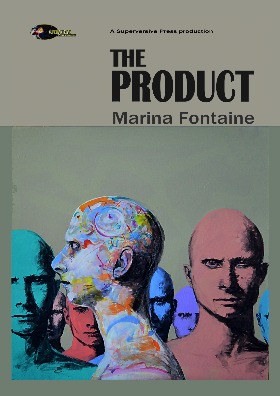
the product book cover fontaine
also allows me to insert little details into my writing that might sound far-fetched, but come directly from my experience. HiT: Reviewers of “The Product” (Superversive Press, 2016) say there are similarities with George Orwell’s “1984.” But they also mention that it’s hopeful. Why did you make it hopeful when that’s not necessarily common with dystopian works?
Fontaine: After publishing my first novel, “Chasing Freedom,” which is set in the near-future United States and was meant to be grounded in the reality of this country, I decided to have a more traditional dystopian setting for my next project.
The society in “The Product” is further gone on the road to totalitarian rule, and more importantly, the population as a whole has no internalized understanding of the concepts of privacy, traditional family or even basic honor and empathy that we all take for granted.

Read the rest of the interview here. And when you're done, please explore the rest of the site for more author interviews, movie reviews and current cultural commentary. Enjoy!


Tuesday, December 18, 2018

Book Review: Knight Training by Jon Del Arroz


Set in the world of For Steam and Country, this novella follows one of the original novel's more likable side characters, James Gentry, as he embarks on his quest to become a Knight. The story is fairly self-contained, so you can read this offering as an introduction to the world if you are hesitant to commit to the full-size novel.

This is most definitely YA, the old-fashioned kind, concerned with coming of age, first love and a youngster trying to prove his worth in the company of experienced and respected men. The love--or rather affection that might blossom into love--is sweet and innocent. The danger and violence,  while heave on the adrenaline rush, are not graphic. Most importantly, this story really is a journey, clearly one of many to come. James is a novice, and so, while brave and clever and quite capable, he is by no means infallible, and not invariably successful. The reader gets to witness the growth, the learning, the failures and triumphs along the way, unsure which part of the mission would succeed or fail and even who would make it through. While this used to be the standard arc of YA adventures, I was reflecting how rare such tales have become. For this alone, the author deserves credit.

The pacing is fast, pausing only occasionally to give us the needed insight into the world or the character's backstory and motivations, creating a fine balance between action and time to appreciate the bigger picture. The characters are as well developed as one might expect in a shorter offering--enough to know their main qualities and to keep them straight, but also leaving us with a desire to know more. The world is only described in relation to the main plot and James' backstory. You really need to read the other Rislandia novels to get the full picture, but it's not needed here. The idea of chasing down a traitor is fairly universal, so not much in the way of explanation is required.

The ending provides enough closure to the plot, but there are definitely many sequel possibilities, and the novella is already listed as part of a series, with the next entry available for sale as of last week.

Highly recommended to anyone curious about steampunk, or in search of a light, fun YA novel, and can be read as a stand-alone or in parallel read to the main Rislandia series.

Purchase Knight Training on Amazon


Monday, October 8, 2018

Kilt Blowing: A Play in Three Parts

While attending DragonCon this year, I decided to check out a kilt blowing event. Being, well, myself, about half way through I realized this topic would be great blogging fodder. Thus, here goes my semi-serious attempt to talk about something that's pretty impossible to even mention without giggling.


Kilt blowing as done at DragonCon is a performance art, and it tells quite a story.

Introduction: The Origin.

Some years ago, a mischievous young woman decided to investigate if the T-Shit slogan "If I wore anything under my kilt, it would be a skirt!" was an accurate representation of reality. So she did what every self-respecting social scientist does. She purchased a hand-held blower, approached a kilt-wearer at a DragonCon hotel lobby and while engaging him in conversation, "accidentally" pressed the ON button. After the third such "accident," hotel security decided that repeat demonstrations, even for the sake of scientific inquiry, were against policy. Still, the idea was born. The young lady made a suggestion to the Con Committee, and the research continues to go on, mercifully in a hall with adult-only access.

Part One. The Main Attraction.

After explaining the rules (no full frontal, but anything else is up to the participants) and passing out the ear plugs to the front rows in anticipation of much excited screaming, the hosts proceeded to invite the participants to the stage, where the aforementioned lady awaited with the blower. It became quickly obvious that the participants were not pre-screened neither by age nor by physical shape, but rather by their sense of humor and strict dedication to having fun. Come to think of it, even though the event has no direct relation to sci-fi or fantasy, it was highly appropriate that it took place at DragonCon, where people gather for the weekend to put aside their differences and enjoy the out-of-the-ordinary entertainment they can't get elsewhere.

The appreciative screaming by the ladies was indeed deafening (I was not quick enough to grab the earplugs, and boy did I regret it), and was dispensed in relatively equal amounts to bodybuilders, skinny geeks and respectable-looking seniors. The men did vary their performances to keep them interesting in spite of the repetitive nature of the event. Most of them were more funny than either sexy or revealing (although a couple of performers bared enough to justify the adults-only admission). And truth be told, my favorite of them all was a shirtless bodybuilding performance by one of the hosts, who was not subjected to the blower treatment at all.

I noticed quite a few men in the audience. Most were there to accompany their wives or support their performing buddies. Some, such as a young gentleman I met while waiting  in line, attended out of pure curiosity, which as good a reason as any.

Before we knew it, the allotted hour went by, and the blower put away, but the full experience was not yet over.

Part Two. Role Reversal.

Upon exiting the room, the audience members were greeted, loudly and enthusiastically, but the performers, who were lined up a couple of rows deep, along one of the hallway walls. And now I understood why so many of the ladies in the audience were so attractively dressed. While the main event was about men putting on a show for the overwhelmingly female audience, the women were now giving the men something to admire as well. As with the performance, sounds of appreciations were dispensed generously to all. High- and low-fives were given by the passing women to their admirers. It was essentially a recreation of an old "woman walking by a construction crew," done in a manner at once over the top and entirely safe, with not a tinge of disrespect.

And thus the full performance was concluded, with Marriott Carpet pattern beer cozies handed out to the attendees as thanks for participation. However, for those still paying attention after all the excitement, at about 2 AM in the morning, there was something else to observe.

Part Three. Coming Home.

As I was walking through the outer hallway to get to one of the Hyatt Regency famous "go down to go up" escalators, I noticed a group of women congregating along one of the walls. I recognized some of them from the audience,so I became curious why they were lingering.

The women were there to pick up their husbands.

This final touch, while unscripted, could not have been more perfect.

We live in times when certain political and cultural forces work tirelessly to re-define the roles of men and women in society. Having essentially won the fight for women's rights and equality, they are attempting to destroy or at least confuse the most intimate, ingrained component of the male/female relationship: rules of courtship and sexual attraction. While making any kind of social statement had to be the furthest thing from the event organizers and participants, nevertheless it brings home some important and timeless truths,

Generally speaking, men like to strut their stuff, to both admire and be admired by the opposite sex.
Generally speaking, so do women.
But when all is said and done, nothing beats coming home to a partner who loves all of you, body and soul.
And, to quote an old credit card ad, having a partner who supports you occasionally doing something outlandish, and waits for you on the other end with a hug and a smile:
Priceless.


Sunday, August 19, 2018

A Not-Quite Movie Review: The Meg


I fully intended to write a real review for this one. But then I thought: who am I kidding? What could I possibly tell you about the movie that you can't get from the trailer? If you pay attention, it gives out every major plot point, and more importantly, if tells you exactly what you'd be getting for the 10+ bucks should you decide to shell them out.

Thus, what follows below, is not so much the review as some thoughts, or more precisely, a sort-of open letter to those who might benefit from paying attention to what makes certain movies successful with the audience while most "serious" film critics scoff at their very existence.

To the collective brains behind Marvel, DC, and Star Wars:

This is how you write strong female characters who are interesting, brave, and superbly capable-- without coming across as Mary Sues, arrogant, or obnoxious.

This is how you, at the same time, write men who are admirable and unabashedly masculine, who respect the women and the choices they make, while never losing the protective attitude towards them. Not every man in the movie fits that description but enough do, to one extent or another.

This is how you write the dialogue that feels real even in the most implausible circumstances. (Marvel writers, to their credit, haven't lost that particular talent. The others, not so much).

This is how you take a corny piece of wisdom and make it work perfectly within the context of the movie, enhancing the big action scene instead of throwing a wet blanket over it. (Looking at you, The Last Jedi).

This is how you take a script where the viewers can predict most plot points, including who lives and dies, yet still have the theater goers holding their collective breath during the crucial moments.

The bottom line? The big secret? The reason why the first words out of my mouth after the credits rolled were "Forget superhero movies. This was better."?

  Forget the A-Listers (although the acting skills were adequate for the task). Forget the insane special effects (although the giant shark scenes and the underwater voyage into the uncharted depths of the ocean were well done). What you really need is good writing and respect for the audience.

Both are crucial.

Good writing without respect for the audience results in scripts that are too complex, too clever, too in love with the next plot twist and subverting expectations, too intent on Making a Point and Being Relevant, often neglecting the movie's main purpose: to entertain.

Respect for the audience without good writing gives us what's known as fan service, or pandering, or whatever term applies in a particular case. Checking off all the popular themes and whatever filled seats in the past doesn't necessarily work if there's no coherent plot and we don't care about the characters.

The Meg has a good balance. It appeals to the lovers of adrenaline-rush action, while providing enough human interaction and likable characters to make us invested. It switches effortlessly from camp to heartbreak and back to camp. It's not a great movie, but it's a good one. Let's make an effort, as consumers, to reward the good. If you want a couple of hours of pure fun that will leave you satisfied, go see this movie. The next Big Awesome Must See entry into one of the franchises will be here soon enough, but those are no longer the only game in town. And from where I'm sitting, it's not a bad thing.

Tuesday, June 5, 2018

To Be Men: Stories Celebrating Masculinity


As most anthologies, this one started with an idea, or more precisely in this case, some "what if" thinking.

With endless submission calls for stories written by [insert an identity group of your choice], one category of authors has never been singled out for a special opportunity: Men.

A few of us were hanging around in the virtual space of social media, discussing this curious phenomenon, when someone came up with a question.

 Could we create a collection of stories written only by men?

The thought was amusing for a while, as we considered the reactions that would inevitably come from certain circles: the accusations, the outrage, the lectures as to how such things just "weren't done." All, of course, would ignore the fact that the exclusionary submission calls were very much done because, well, the fairness standards just aren't the same across the board.

But then, after we've indulged in our daydreaming and considered some of the possibilities, we realized something.

Trolling the hypocrites would've been fun.

But we were not trolls. We were authors.

Our readers deserved something special, something better than a joke, something that truly met their needs and left them satisfied.

We were going to give them good stories.

Stories about men as heroes and role models, fathers and mentors, hardened warriors and even fantastic creatures. Men who are interesting, capable and worthy. Characters whom you'd want to meet, to spend time with, to learn from, and whose stories will stay with you after the reading is over.

And just like that, the authors' gender became irrelevant.

The project went from a semi-joking discussion to a serious endeavor. A female editor stepped in to take charge, and Superversive Press picked it up for publishing.

In the end, the anthology brought together authors from different backgrounds, writing in a variety of genres, and of course both men and women.

As it should be. After all, the focus on quality is not exclusionary. It is, in fact, the most even playing field that could possibly exist.

Personally, although I tend to gravitate towards reading male authors, two of my favorite entries in this collection came from women (Monalisa Foster's Cooper and Julie Frost's Man-Made Hell).

I was delighted when my story Picture Imperfect, set in the world of my dystopian novel Chasing Freedom, made the cut. Now, having seen the full project come to fruition, and having read the stories from my fellow contributors, I am honored to be in their company.

If the concept of celebrating masculinity appeals to you, or if you are simply looking for something exciting and fresh to read, give this new offering from Superversive Press a try.

Happy reading!


The paperback edition is ready to ship, just in time for Fathers' Day.

The E-book is available for pre-order and will be officially published on June 16.


Monday, May 28, 2018

On Memories and Barbecues


Today is Memorial Day, and our social media feeds are filled with photos, memes and articles honoring the fallen soldiers. These are proper and valuable, especially in these days where even on a holiday weekend we run from one event, task, or source of entertainment to the next without pausing for even a moment to remember the significance of the day and what it is we're supposed to be celebrating.

Nestled amongst those necessary poignant reminders are others, ranging from humorous to downright hostile, that tell us how Memorial Day is "not about a barbecue."

Those statements are correct, as far as they go. Memorial Day is not about a barbecue, any more than Christmas is about going to the mall.

Memorial Day, as all American Holidays -- in fact, as most national Holidays in the world -- is about more than the shallow manifestation of its celebration, but also more than its original intention. It's part of our national identity, our traditions one of the many things that still hold us together even in current times of political strife.

Yes, first and foremost, today is about remembering the sacrifice of the fallen.
It is also about taking time to think of them, not as faceless multitudes, not as torn up bodies on faraway battlefield, but as individuals.

They dreamed, laughed, had interests and hobbies; had family and loved ones. Each life was unique and valuable, and all of them were cut short.

Perhaps it is proper, then-- having paid respect to their memories, whether by thought, by prayer, by attending a local parade, or by visiting a military cemetery-- to spend at least part of the day enjoying the comforts of our lives, including food and drink, family and friends.

We get to live our lives, the way we want to, because countless others didn't.

But be sure to remember your enjoyment, your comfort, and more importantly your freedom came at a cost.

Ask yourself if you've done enough to keep that freedom, for yourself and for generations to come.

Resolve to do more, today and every day. There might be a price to pay-- there always is a price, even here and now-- in loss of friendships, financial comfort, family harmony, or even employment. Yet it pales in comparison to what those who came before us have already given.

Don't feel guilty over the fallen soldiers' sacrifice.

Just make it all worth it.


Sunday, April 1, 2018

Dear Children, We Have Failed You.


A common theme surrounding the current hysterical calls for gun control is that adults have failed, and it's time for the children to come up with the solutions.

Never mind that only about 10% of the participants at The March For Our Lives were teenagers. Never mind that the organization and funding came from adults.
Never mind the endless adoring coverage from the legacy media.
Never mind the "spontaneous walk-outs" organized, encouraged and in some cases mandated by the schools.

The narrative is clear: the kids should take over and show the rest of us how it's done.
Because we the adults have failed.

And, in truth, we have.

My generation grew up during the tail end of the Cold War. We watched the Berlin Wall come down and the once-unstoppable Soviet Union fall apart. Those were heady times. People smarter than us spoke of the end of history. Freedom was on the march throughout the world and there was no stopping it.

Sure, there have been quibbling at the edges as to the causes of the fall of the Soviet Union. Mikhail Gorbachev received the Noble Peace Prize. Ronald Reagan's iconic "Tear Down This Wall" line has gone down in history even though most of the mainstream historians steadfastly refuse to give him any credit. But for the most part, especially as more details emerged from behind the Iron Curtain, everyone has accepted the fact that human progress towards freedom had been inevitable all along.

Those on the Right took it as validation that Western system of government has stood the test of time. Those on the Left decried the resources spent on the military and celebrated the peace dividend.

It was all good.

The mighty enemy was gone, its ideology defeated.

We could, pardon the expression of unfortunate origins, declare victory and go home.

And so we had.

With no visible external threat to worry about, we had our chance to give our children the best, most prosperous future that we could.

We obsessed over child safety. We baby-proofed our homes, searched out the safest crib designs, took hours to perfectly install that car seat and endlessly fretted about chemicals and allergens in baby food.


We read all the books, and we were going to get it right. Because, unlike the prior generations, whose worldview was colored by wars and ideological strife, we could afford the luxury.

Our error was as tragic as it was, in retrospect, obvious.

We'd become complacent.

We allowed our political leaders to take more and more control of our lives while we weren't paying attention.

Worse, and most unforgivably, while spending all our energy on keeping our children safe in body, we forgot to protect their minds.

We left both their entertainment and their education to the professionals, but we never stopped to check who those professions were, and, let's face it, had always been.

With the parenting books telling us to "trust the child," we hesitated to correct and question the ideas our children acquired from an early age. We thought a four-year-old crying that we were killing the planet, or a five-year old refusing to eat a hamburger was precocious and adorable. Our children were so smart! So advanced! They cared so much! Of course, they would surely outgrow the silliness and recognize the reality. Let them explore the ideas and think for themselves. After all, that's what modern schooling was about: teaching the children to think for themselves rather than forcing them to memorize all the boring facts.

We didn't so much miss the warning signs as we chose to ignore them.

In part, it was lack of time, what with both parents working as hard as they could to make sure we could still afford that house in the suburbs, where our kids could go to the best public schools. (And those "free" schools don't come cheap, but who can quibble with yet another local tax increase that would be going towards better education?).

But mostly, and let's be honest here, we simply didn't want to rock the boat. We didn't challenge the school curriculum, or whatever ideas individual teachers chose to feed into our children't minds under the guise of education. After all, we wanted to stay in good graces with the teachers and the school administrators. We wanted our children to have the best grades and the best behavior records. We were looking forward to filling out those college admission apps and having to ask teachers for recommendations. So why bother to challenge the status quo? What can one parent do against the whole educational system?

And so we waited and hoped. Our kids were smart. They had all the resources. Surely they would not be satisfied to simply read the books and listen to the teachers? They were bound to rebel eventually, to start asking questions, just like every generation before them?

Our hopes were in vain.

The new generation is "rebelling" not by asking questions, but by mindlessly repeating what they've been taught. They march hand in hand with their radical elders, demanding for their rights to be taken away, while claiming to own the future.

And make no mistake about it, we of Generation X bear much of the blame.

But all is not lost.

I, for one, refuse to wallow in generational guilt and to leave the world to the screeching multitudes of the brainwashed. We can acknowledge with brutal honesty what went wrong and refuse to double down on our mistakes.

We can teach those willing to be taught.
We can fight those who need to be defeated.
(And we would do well to learn the difference.)

What we can't do is despair and step aside.

There is a scene in my dystopian novel Chasing Freedom where a young man is wondering what it was like to live in the days when freedom was taken for granted, and how it all went wrong.

We know the answer to both.

What we do with that knowledge is up to us.

Dear children, we have indeed failed you. But rest assured, we are not giving up. Join us, and help us fix this broken world. You have nothing to lose but the chains of nihilism, hate and despair thrust upon you by those who wish to keep controlling your minds.

Don't let them.
Choose life.
Choose freedom.
Choose the future of your own making.

Let's get to work.


Sunday, February 4, 2018

Papa Pat Rambles: "MAGA 2020 & Beyond," by the Usual Suspects


This substantial and highly complimentary review of MAGA 2020 & Beyond is especially gratifying because the reviewer, whose political affiliation is hard to pin down, understands exactly what we set out to accomplish. This anthology is meant as a celebration, both of the unlikely political victory and of all the possibilities that come as a result.

I appreciated the reviewer's kind words about my two contributions to the anthology. Of course, I am in very good company since every other story and essay has something to offer, as you will see in the mini-reviews Mr. Patterson provides.

In addition, his personal commentary on the current state of our great country is worth reading in tis own right even if you're not (or maybe especially if you're not) a fan of the President.

Papa Pat Rambles: "MAGA 2020 & Beyond," by the Usual Suspects:     My Amazon review, which needs votes, has yet to be released by the Amazon crew, after 22 hours. Coincidence, or conspiracy? You dec...

Sunday, January 21, 2018

A Night For Freedom NYC


Last night it was my privilege to attend A Night For Freedom event hosted by Mike Cernovich. The event had been repeatedly misrepresented and sabotaged by the Left even before it began, and I spent most of yesterday on Twitter following the organizer's scramble to find yet another venue after two others reneged on their contracts at the last moment. I'm not generally conspiracy minded, but it did look to me as a concerted effort to stop the event from happening. Whether the two different venue owners were paid off/intimidated, or were intending to cancel all along will be for the lawyers to untangle. The bottom line was, the opposition was bound and determined to keep a few hundred people from getting together and having fun at a private venue.

To re-phrase an old joke about Jewish Holidays:

They tried to stop us. They failed. Let's party.

Oh yes, I'm going there. The fervor seen on the Left to shut down all dissent absolutely comes from the same place as ancient tyrannies that practiced religious prosecution. Fortunately, in this country, they don't have the power of the State to support their desire to silence and if necessary kill those who do not share their worldview.

Or rather, they don't have it YET. Every time someone nods approvingly at a "Punch-a-Nazi" joke, we inch closer to the day when incidents like the unprovoked attacks at the attendees last night become the norm. And that is when the First Amendment becomes just words on paper.

No, we are not yet there. But we can't dismiss the urgency of our situation either. Citizens who have lost their right to think and speak different ideas, and to get together to discuss those ideas, are no longer free.

And so I was, an immigrant from the former Soviet Union, after 30 years in the country that's been a beacon of freedom to the world, about to attend an equivalent of a dissident meeting.

If that was not enough cause for trepidation, I came to the event alone, which is something I almost never do.

Naturally, this being an "Alt-Right" event and all, I quickly came across a group of Russian/Ukrainian Jews and spent most of the main program hanging out with those fine gentlemen, bonding over our love of Ayn Rand and making fun of feminism. They also introduced me to Michael Malice, a Ukrainian-born writer and commentator best known for his book Dear Reader: The Unauthorized Autobiography of Kim Jong Il. 


What's that, you say? This doesn't sound like the "Alt-Right" crowd at all? Well, who are you going to believe, mainstream media or someone who was actually in the room?

The program itself was ranging from inspiring to pure fun, with everything in between. Owen Benjamin channelled the late George Carlin at his edgiest, and performed a large part of it as musical numbers to boot. Michael Malice presented an optimistic spin on the current cultural and technological challenges and advances. Jack Prosobiec did a spoken word performance tribute to the American flag. Gavin McInnes was his usual irreverently hilarious self.


But the best speech of the evening, somewhat to my surprise, came from a Canadian political commentator Stefan Molyneux. He encouraged us to ask a question that may of us immersed in the culture war and political strife often forget.


We all know what we're against. In fact, we know it so well it's possible to spend days, weeks and even months in a state of simmering anger at what is being done to the country we so love under the guise of common good and political correctness.

But what is it that we are FOR?

Generally speaking, movements built only on destroying the status quo, no matter how tyrannical, end up either failing entirely or turn into their own form of tyranny when they prevail. But also, for practical purposes, it's easier to convince people to follow you if you can present a vision of the world YOU want to build. Tempting as it is to say, "Let's just defeat the Left and we'll figure out the rest later," we do need to know OUR vision and we must be able to present it in a coherent way.

And this, for me, is one of the bigger takeaways from the event. It's important to fight, and I will always support those willing take on the modern version of Thought Control Police. But in the long run it's also important to present an inspiring, positive vision of the future. A Night For Freedom was more than a political event. It was also a party, a celebration, complete with almost two hours of dancing, and I suppose our the fact that our last-minute venue was an actual nightclub was very appropriate.

While Left-wing artists lament loss of creativity because their favorite candidate lost an election, we are the ones having fun: partying, creating, and inspiring. This is how we get people on our side. And this, friends, is how we win.

Speaking of Winning, Superversive Press has lowered the price for MAGA 2020 and Beyond to celebrate the first Anniversary of Donald Trump's inauguration. Pick it up and enjoy stories and essays that present a positive, optimistic future. Happy Reading! 


Monday, January 1, 2018

Happy 2018! Looking Behind and Planning Ahead.

Putting a certain scientist of outstanding pomposity aside, there is always a special feeling that comes with ushering in a New Year. Unlike personal milestones, such as a birthday or an anniversary, this one is universally understood across generations and cultures. Even for those, like myself, whose religious New Year does not coincide with a secular December 31st celebration, the date is still significant.

It is always useful, after all, to take time to assess where you've been and plan where you want to go. Doing it with a glass of bubbly in your hand, and sharing the experience with millions around the world, is as good a way as any.

As a woman of a certain age, I am surprised and gratified that 2017 was a year of challenges and learning.

My first-ever visit to Dragoncon, covered in detail in this podcast, and also in my guest post at Uprising Review was more than an opportunity to get out of my comfort zone. I also showed me that perhaps I'm not as much of an introvert as I always thought. I didn't mind the crowds. (OK, I wasn't happy about standing online for 2hrs trying and failing to get into the Alton Brown show, but nevertheless...). I loved chatting with strangers in the Con Suite and taking photos with cosplayers. I even enjoyed every introvert's nightmare: participating in a panel. But of course one of the highlights of the visit was randomly running into John Ringo outside one of the host hotels. And yes, I shook his hand and told him I was a fan and he was gracious enough to chat. On the whole, the Dragoncon experience is hard to describe except that now I fully understand why people come year after year for decades.


In terms of creative news, writing for and helping put together the Superversive Press anthology MAGA 2020 and Beyond was the biggest event of my year. As one of the editors for the project, I got to work with both new an experienced writers, and my interactions with them were both positive and rewarding. In fact, I enjoyed it so much I might be doing more editing in the future should an opportunity present itself. The SQUEEE moment, of course, came when I lucked into editing the Foreword by one of my favorite celebrities (if that's the proper word): Milo Yainnopoulos. In light of the current controversy, I am happy to report he delivered a very clean copy and took all the edits 😀


There were other interesting new experiences, included but not limited to: finally visiting Washington, D.C. and taking tour of the White House (hey, my Congressman turned out to be good for SOMETHING!); getting yelled at in a convenience store parking lot for wearing a MAGA hat; getting blocked on Twitter by a Senior Editor at National Review; and being a guest on an L.A. broadcast radio show The Writer's Block.

Plans for 2018? A this point in my life, I'm not too much of a planner because life has a way of changing things. However, I have already booked my next Dragoncon trip, and as for my other goals... More writing, challenging myself, and making new friends on- off-line.

Happy, healthy and prosperous 2018 to all my readers, and thanks for sticking around!